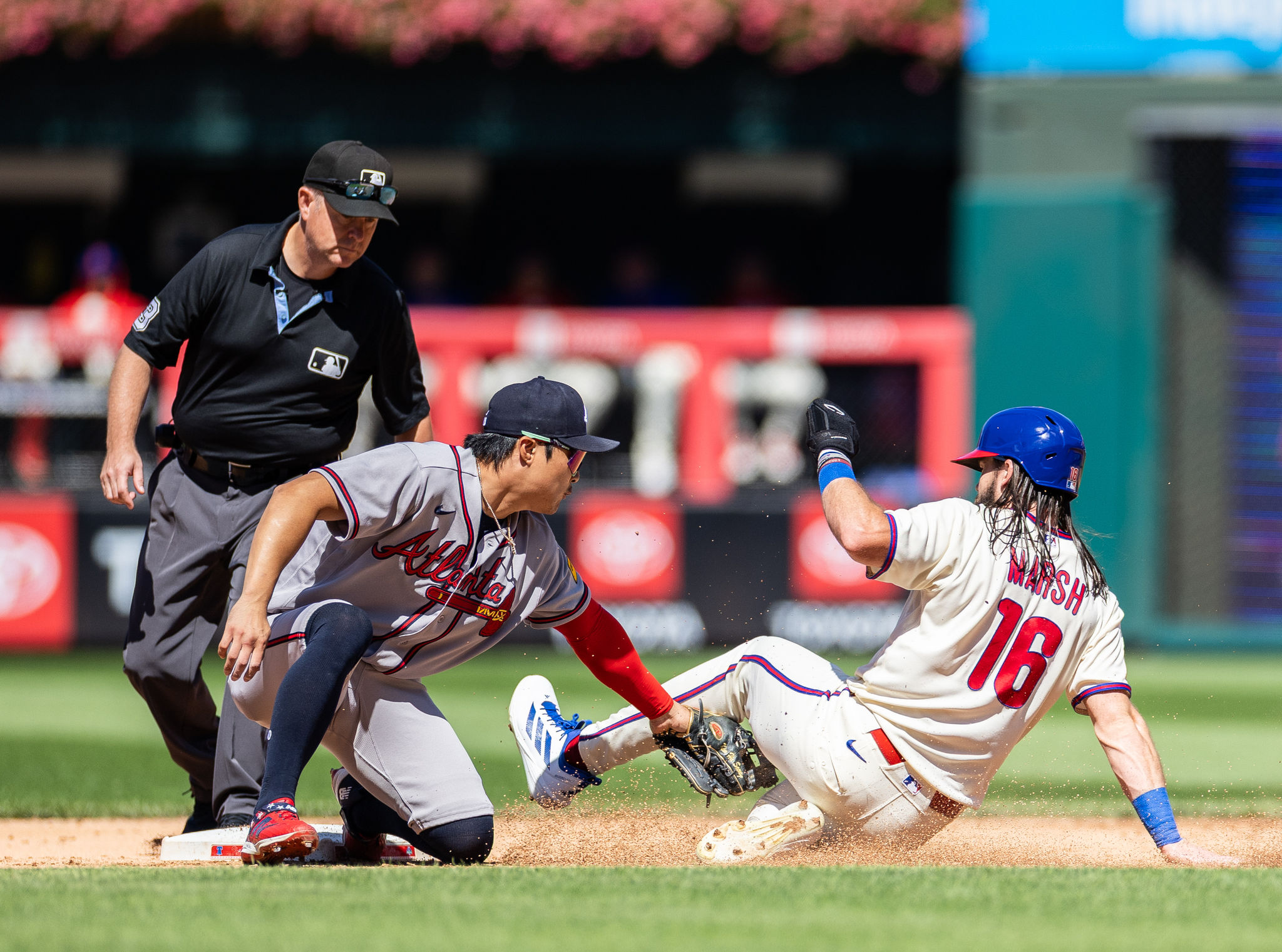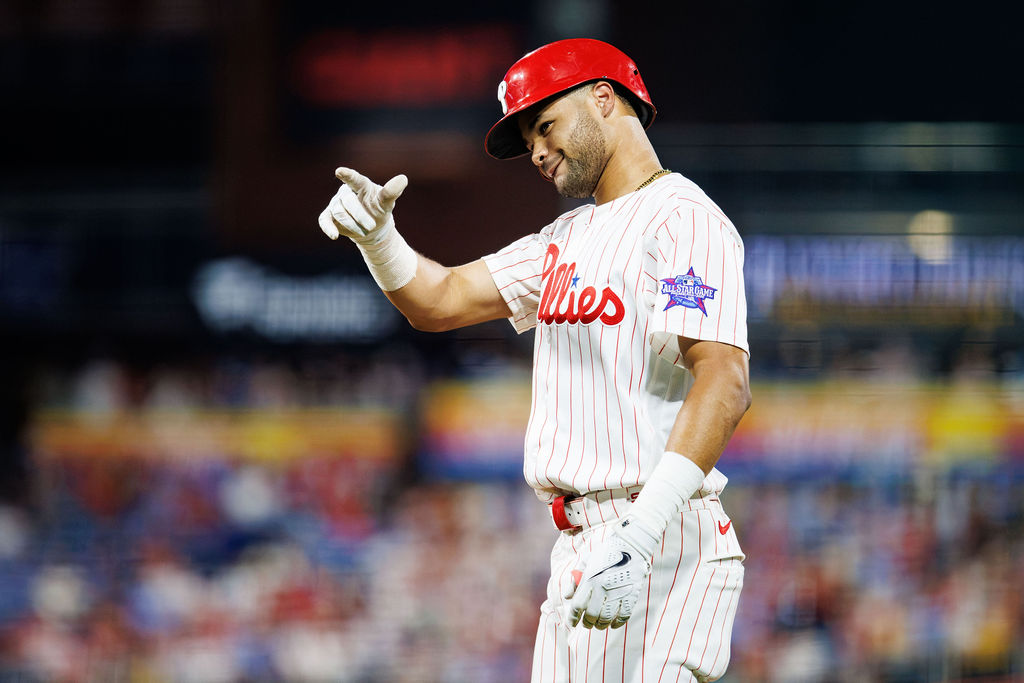
For the first time since 2022, the Phillies had a rookie take down at least 450 plate appearances in a season. After he hit .334 in Triple-A in 2025, there was not much more for Justin Crawford to prove in the minor leagues. So the Phillies gave him an opportunity this year and allocated significant playing time for the speedy young contact hitter.
Crawford’s debut season as Philadelphia’s primary center fielder was underwhelming. He had moments where his grounder-heavy approach at the plate worked, like in his decent April and impressive August. But overall, his success as a prospect did not immediately produce major-league results.
It was not a disaster. As manager Don Mattingly put it, the outfielder “kept his head above water.” Still, Crawford will need to show more in order to secure his spot as a regular as the Phillies look to complement their veteran core and end their streak of early postseason exits.
“Where he goes is kind of — I shouldn’t say totally dependent upon him,” Mattingly said earlier this month. “It’s dependent upon us to get it out of him and to help him go there. A big part of that is him just continuing to work, continuing to believe, always continuing to believe that I’m going to get better, you’re going to get better and I have to get better. So it’ll be interesting to where it goes with him, and I think the sky’s the limit with Justin.”
This week, the club finalized the coaching staff that will work with Crawford and the rest of the lineup in 2027. In Mattingly’s first year with the interim tag removed, former Red Sox hitting coach Peter Fatse has joined the Phillies in the same role. Joe Cronin, who worked with Fatse in Boston, was hired as an assistant hitting coach. Edward Gonzalez, an assistant hitting coach in 2026, was retained for next year; assistant hitting coach Rafael Peña will not return in that role in 2027.
This revamped hitting staff will be tasked with guiding a group that had only two above-average regulars (Bryce Harper and Kyle Schwarber), according to OPS+, in 2026. Just about every returner except Harper and Bryson Stott performed worse than the year prior. The key to improvement, in addition to potential offseason reinforcement, could come down to approach and pitch selection. The Phillies flashed patience in a stellar August, but it did not stick.
“I think every offense is subject to what you swing at, right?” Fatse said Friday. “… It just comes down to the conversation around what you’re swinging at, but more specifically before two strikes: How do you prioritize what parts of the zone that you want to attack? Having a game plan for that, and then ultimately being able to be agile when the game tells you something else is needed.”
That’s quite applicable to Crawford even though he is a different style of hitter than most of Philadelphia’s lineup. As a 22-year-old, he batted .264/.309/.353 with three home runs, 19 doubles and five triples. He walked 27 times with 82 strikeouts in 465 plate appearances. He put the bat to the ball at a high clip, but his 37.6% chase rate ranked in the 12th percentile and might have affected his quality of contact. He was not on base all the time and often had the biggest boppers coming to the plate when he was, so he was limited to only 17 steals in 21 attempts despite a 96th-percentile sprint speed. It might be a challenge to make the necessary tweaks, but it felt like there was more in the tank that Crawford just wasn’t fully able to tap into.
“I think the biggest thing about Justin,” Mattingly said, “is: Where does it go from here? Because he needs to be a guy that causes havoc, right? Where he’s a 30-to-40-stolen-base guy. To do that, you got to get on base. He strikes out maybe a little more than he should, doesn’t walk as much as he should. So he has to get to where he controls the strike zone better. I think that’s the general theme for him. And I think there’s upside with Justin.”
Asked about the chance to work with Crawford, Fatse mentioned his time around young players like Ceddanne Rafaela, Wilyer Abreu and Roman Anthony as they transitioned to major leaguers in Boston. He knows that it’s all a process to go from a prospect to a contributor and that teams will look to exploit the weaknesses of rookies.
“So obviously navigating the big leagues your first year, there’s a lot of things going on,” Fatse said. “You’re adjusting to the league. The league adjusts to you quickly, and I think there’s just a general transition period to that. Ultimately, my philosophy with dealing with young players is you have to get them to really lean into their strengths and what they do well, because, like I said, this game, especially at this level, they’re going to go right to what you don’t do well. So how do we put you in the mindset or put you in a position to maximize the things that you do well?”
Now, it’s up to Crawford and the staff to make it so that he can get the most out of his talents. He makes more contact than most major leaguers, but maybe he could make better contact if he improves what he’s swinging at. Perhaps there are swing adjustments that could allow him to hit more line drives into gaps and show off his speed.
Fatse will continue to dig into Crawford’s season and make assessments, but it doesn’t sound like he wants to completely overhaul who he is as a hitter. Instead, the coach wants to find ways to better utilize Crawford’s abilities. If they can collaborate on a plan that does that, it could be pretty important for the Phillies. There will still be questions about his defense after an inconsistent showing in center, but an improvement with the bat would be a great sign. Even a slightly below-league-average offensive version of Crawford could do wonders to lengthen the lineup and support the core pieces of the roster.
“I’m still learning Justin,” Fatse said, “but obviously another guy that’s very dynamic. He’s shown the ability to get hits in the minor leagues and get on base. I think that’s something that, as he continues through the early part of his major-league career, I’d expect to see development on that front as well. But I think it ultimately comes down to: How do we leverage a player’s strengths when they’re up here early? That’s more of a — I wouldn’t say a confidence thing — but just from my experience with players, you’re not chasing down something maybe you don’t do well. You’re trying to put yourself in the best possible position to have success.”